Professional Services
Professional service firms, including notaries, can review a client’s financial evidence and source of wealth in high-value matters. Clearer documentation for compliance and risk review.
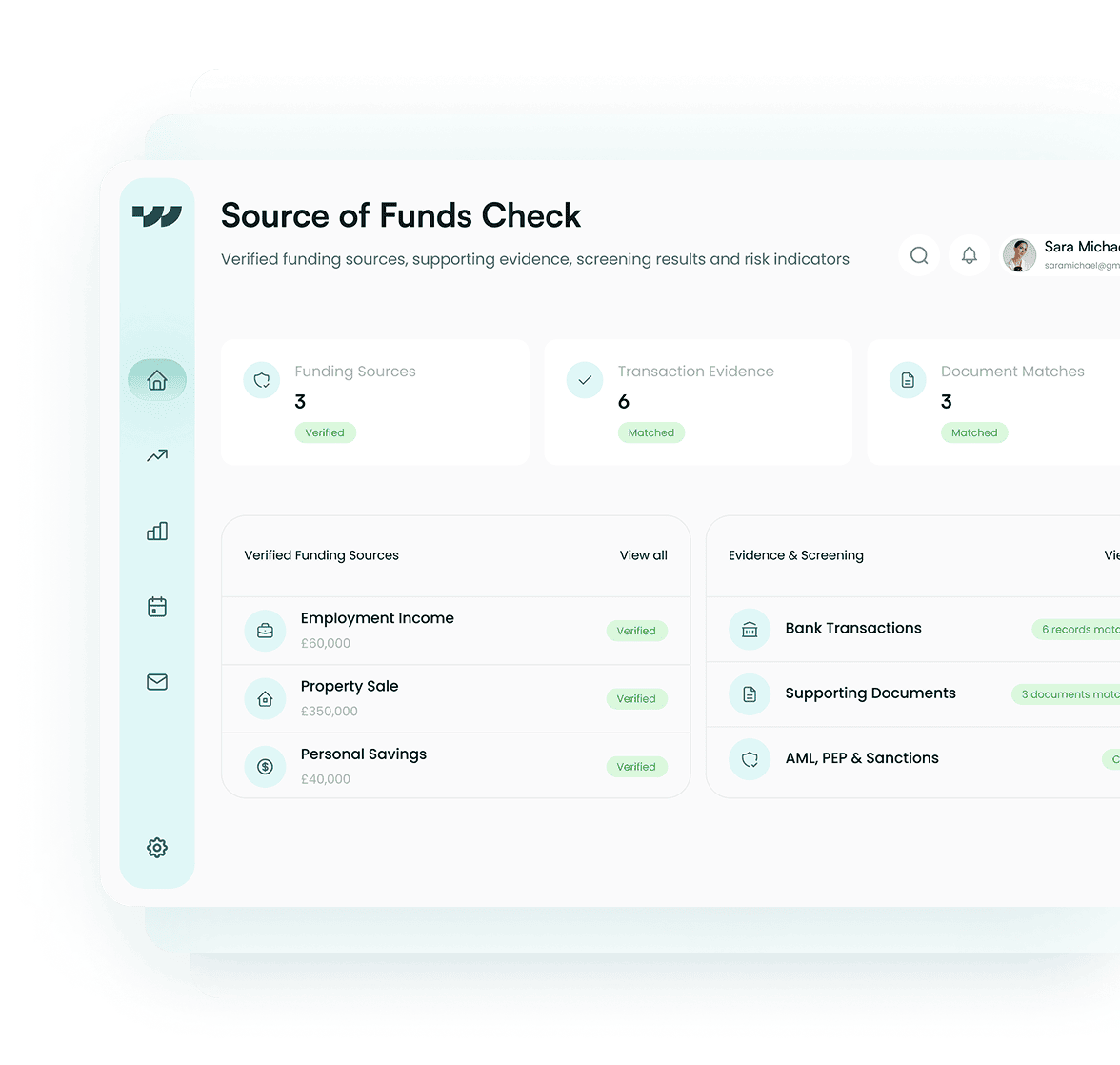
Bring documents and consent-based banking data into one Sources of Wealth assessment. WealthCheck helps compliance teams understand how customers accumulated wealth, spot inconsistencies, and review findings.


Repeated document requests can slow down onboarding for HNWIs and customers with complex finances.
Compliance teams often check tax records, ownership details, asset history, and financial data separately.
Incomplete, conflicting, or altered evidence can make it difficult to verify the customer’s wealth origin.


Customers connect their bank account with consent or upload records such as tax documents, bank statements, property deeds, and equity agreements.
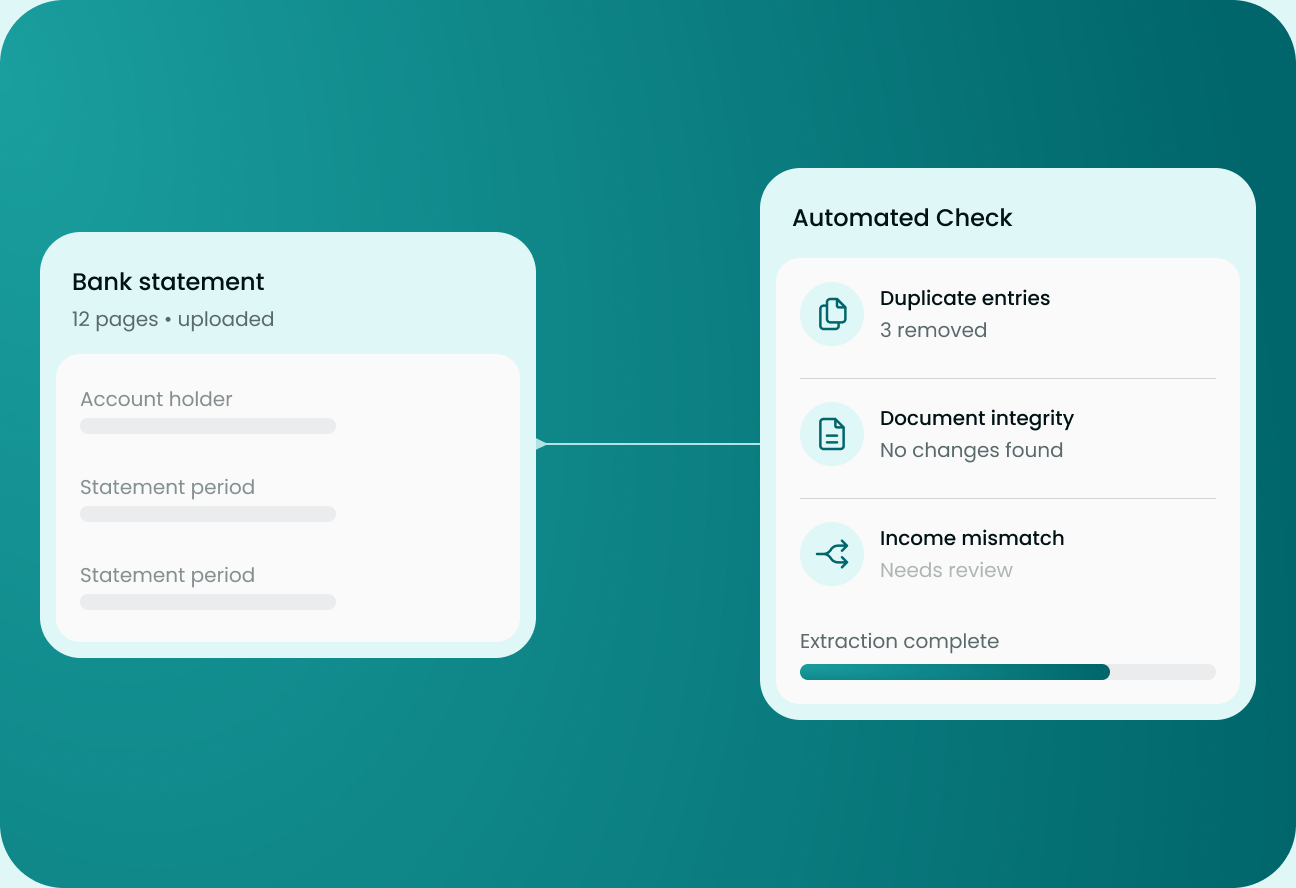
The system reads the records and checks the financial data for conflicting information, document changes, and other issues.
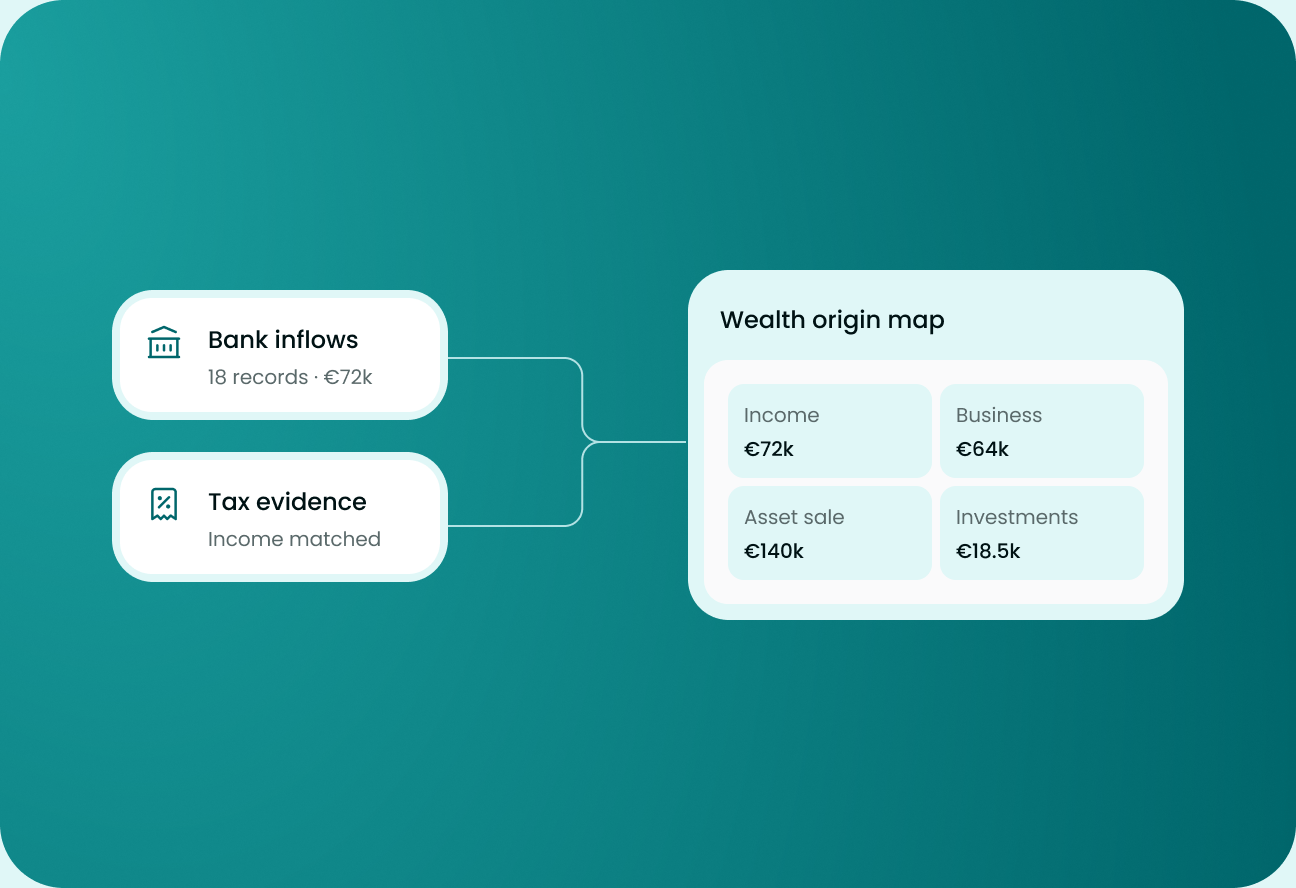
Evidence is grouped around income, business activity, investments, asset sales, or inheritance, while unexplained gaps are highlighted for review.
Findings appear through the dashboard or API, where compliance teams can review the evidence and make the final decision.
Customers connect their bank account with consent or upload records such as tax documents, bank statements, property deeds, and equity agreements.

The system reads the records and checks the financial data for conflicting information, document changes, and other issues.

Evidence is grouped around income, business activity, investments, asset sales, or inheritance, while unexplained gaps are highlighted for review.

Findings appear through the dashboard or API, where compliance teams can review the evidence and make the final decision.

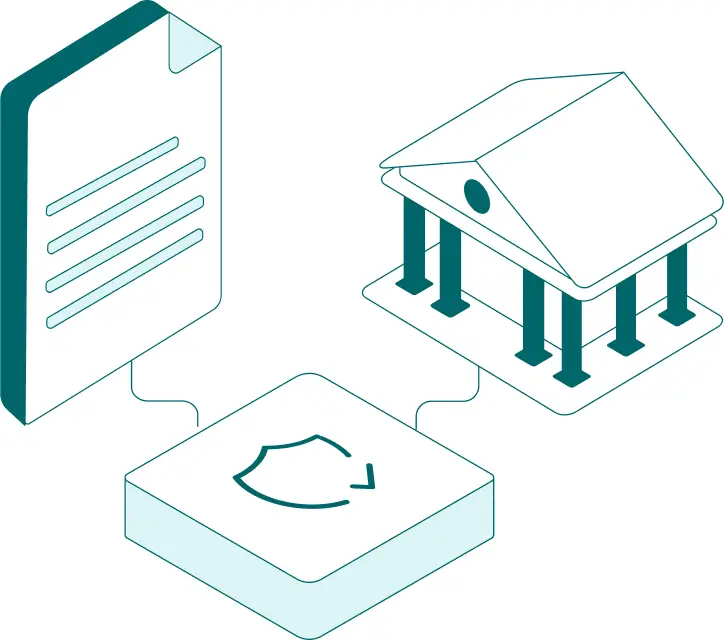
Financial Data & Evidence Collection checks consent-based banking data alongside tax records, bank statements, and other supporting documents.


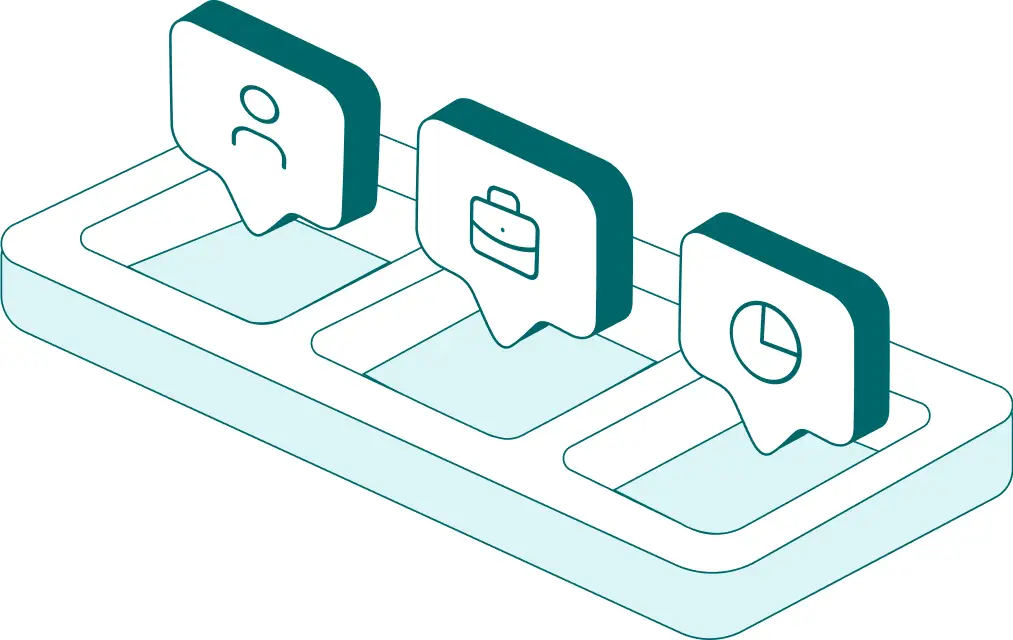
Wealth Origin Categorization sorts the evidence by business income, asset sales, salary, dividends, inheritance, and investment returns.
Forensic & Risk Review checks documents for altered data, conflicting figures, unexplained wealth gaps, and other warning signs.

WealthCheck reads banking data, bank statements, tax records, and other supported financial documents in the same assessment.
OCR reads financial details, while document checks detect altered figures, metadata issues, formatting changes, and conflicts.
WealthCheck compares the customer’s stated wealth sources with financial records and supporting documents.
Cross-source checks find differences between the customer’s stated wealth, income history, financial activity, and documents.
Risk & Fraud Detection finds unusual financial patterns, document conflicts, and other warning signs.
The report, dashboard, or API clearly shows the assessment findings for compliance review.
Affordability Assessment checks income, regular expenses, commitments, and account activity to calculate disposable income.
Source of Funds Assessment traces the money behind a specific transaction and checks the stated origin against banking data and documents.
Credit Risk Assessment checks liabilities, cash flow, repayment capacity, and other financial risk factors.


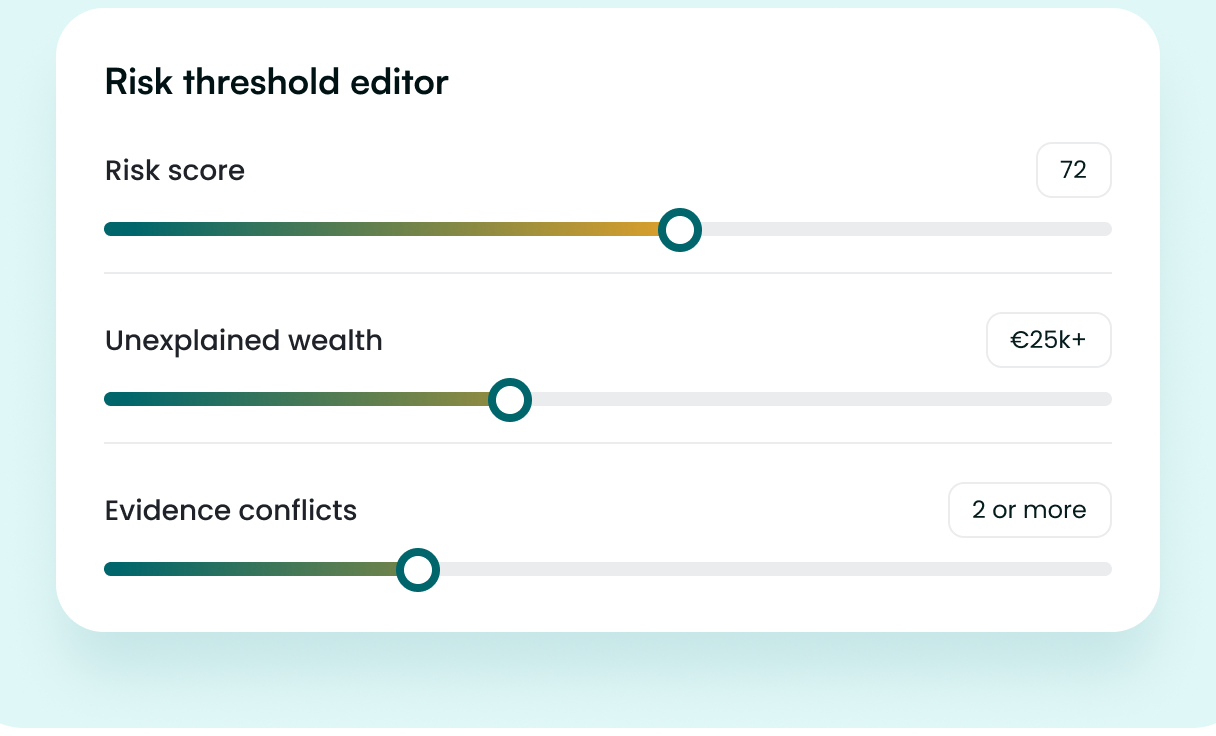
Custom thresholds trigger extra checks when WealthCheck finds unexplained wealth or conflicting evidence.
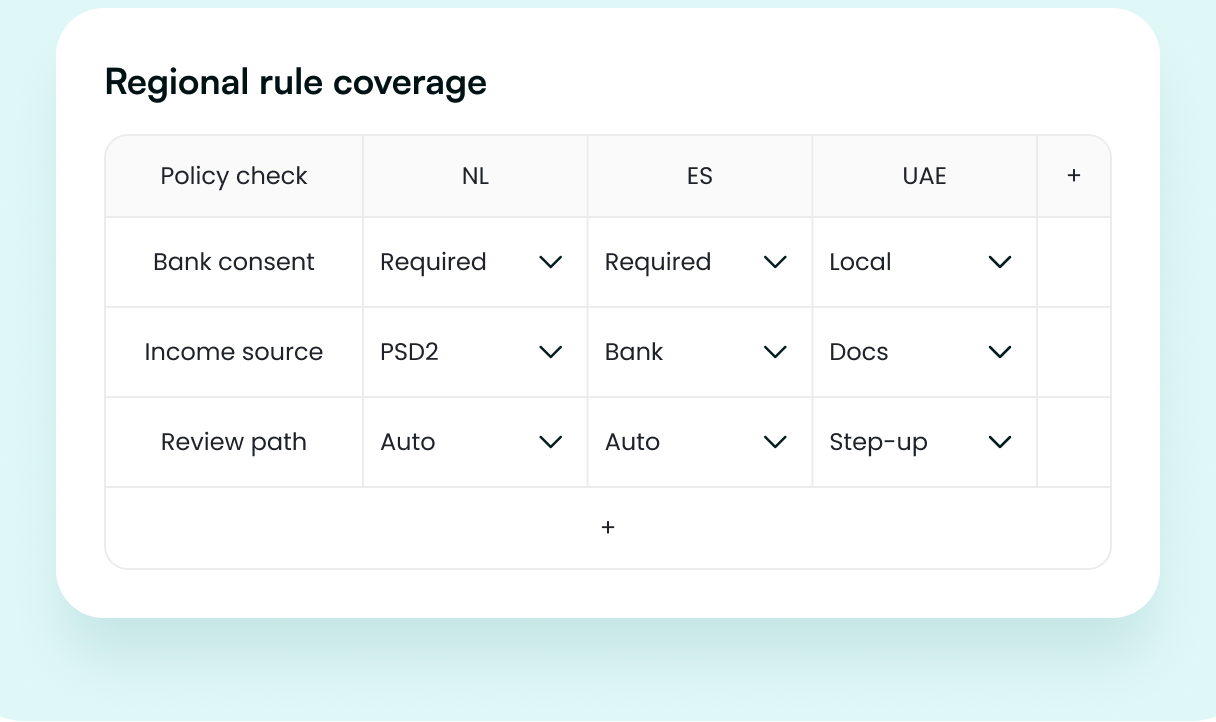
Jurisdiction-specific rules adjust the check for different markets and regulatory requirements.
Step-up triggers send cases with missing evidence or higher risk to extra checks or manual review.
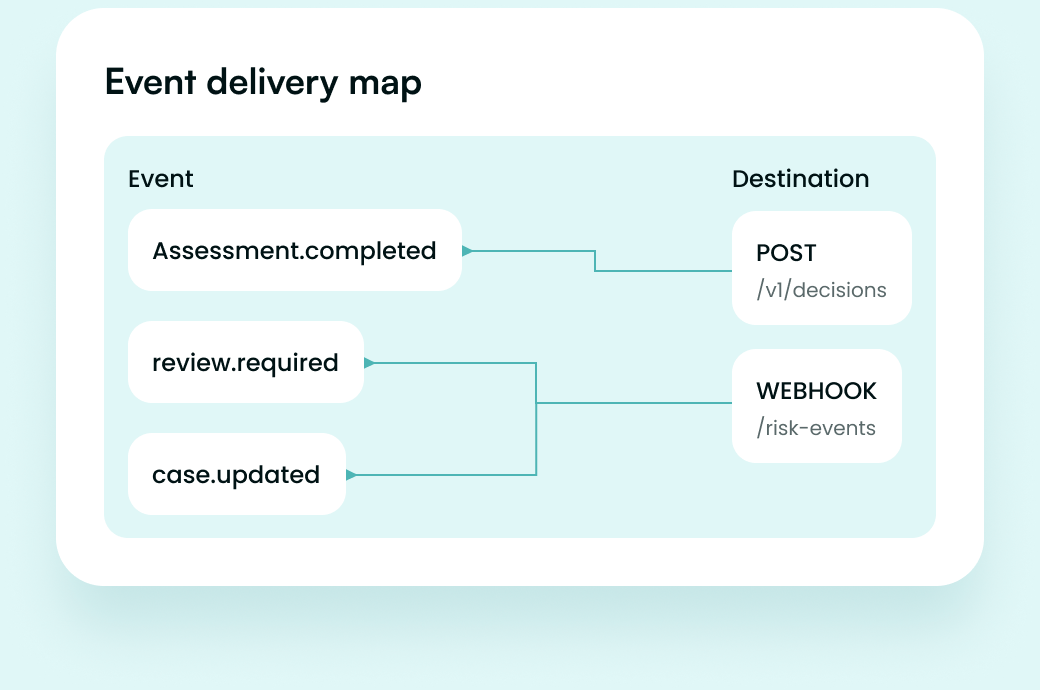
API and webhook settings control where WealthCheck sends results and case updates.

Professional service firms, including notaries, can review a client’s financial evidence and source of wealth in high-value matters. Clearer documentation for compliance and risk review.


Investment platforms can review a customer’s income, bank activity, investments, and supporting documents to understand how wealth was accumulated. Clearer evidence for compliance and risk review.

Banks and lenders use the assessment when income records alone do not explain a customer's wider wealth position. Clearer financial evidence for risk, compliance, and customer review.

Operators can check a player's income, bank activity, and source of funds when a case needs a deeper financial review. More financial context for AML, affordability, and player-risk reviews.

Mortgage and property teams can trace deposits and other funds used in high-value property transactions. Clearer evidence of the buyer’s funds and financial position.
The summary shows verified assets, declared wealth sources, and the amount linked to each source.
The audit trail records financial activity, asset sales, supporting documents, and cross-source checks across the assessment period.
The index lists unexplained wealth gaps, conflicting information, document changes, and other risk indicators.
The time-stamped record shows which checks WealthCheck completed and prevents later changes to the record.
“Before using WealthCheck, our team had to compare customers’ financial information across several different systems. Now, the process is much easier, and the comprehensive report we receive from this tool allows our specialists to spend more time reviewing complex cases and making final lending decisions.”
“WealthCheck helped us review deposit limit increase requests using actual financial data instead of relying solely on user-declared information.”
Answers to common questions about source of wealth verification, financial evidence, risk review, and integration.
Source of wealth assessment checks banking data and financial documents, compares the information, and returns any differences or risk findings to the reviewer.
Source of Wealth explains how a customer accumulated their overall wealth over time. Source of Funds traces the money used for a specific transaction or payment.
WealthCheck checks each available wealth source separately and compares it with the customer's financial records.
OCR reads the document data, while additional checks look for metadata problems, formatting changes, altered figures, and conflicts with other records.
Yes. Compliance teams can view the report, evidence, and risk findings through the dashboard, API, or embedded flow and use them to make the final decision.
Yes. Configurable thresholds and review rules determine when a case requires additional checks or manual compliance review.
Teams can use the dashboard, API, or embedded flow to collect financial evidence and return assessment results within their existing review process.
WealthCheck uses consent-based access for banking data and follows GDPR requirements for the processing of personal financial information.
Review wealth origins, financial evidence, discrepancies, and risk indicators in one structured process that gives compliance teams a clearer basis for complex customer reviews.