
A credit application gives the lender more to assess than the amount requested. The lender must assess the likelihood that the borrower will make the payments required under the credit agreement. In this article, the creditworthiness definition refers to that judgment.
Key Takeaways
Creditworthiness is a lender’s judgment about a borrower’s expected ability and propensity to meet a specific credit obligation.
- Creditworthiness is a lender’s judgment about a specific credit request and the borrower’s current position.
- Income or cash flow, existing commitments, repayment history, and financial stability can all affect the assessment.
- A credit score is a separate model output and may not reflect all of the current evidence used by the lender.
- Affordability measures repayment capacity as one part of the wider creditworthiness review.
What Is the Creditworthiness Definition?
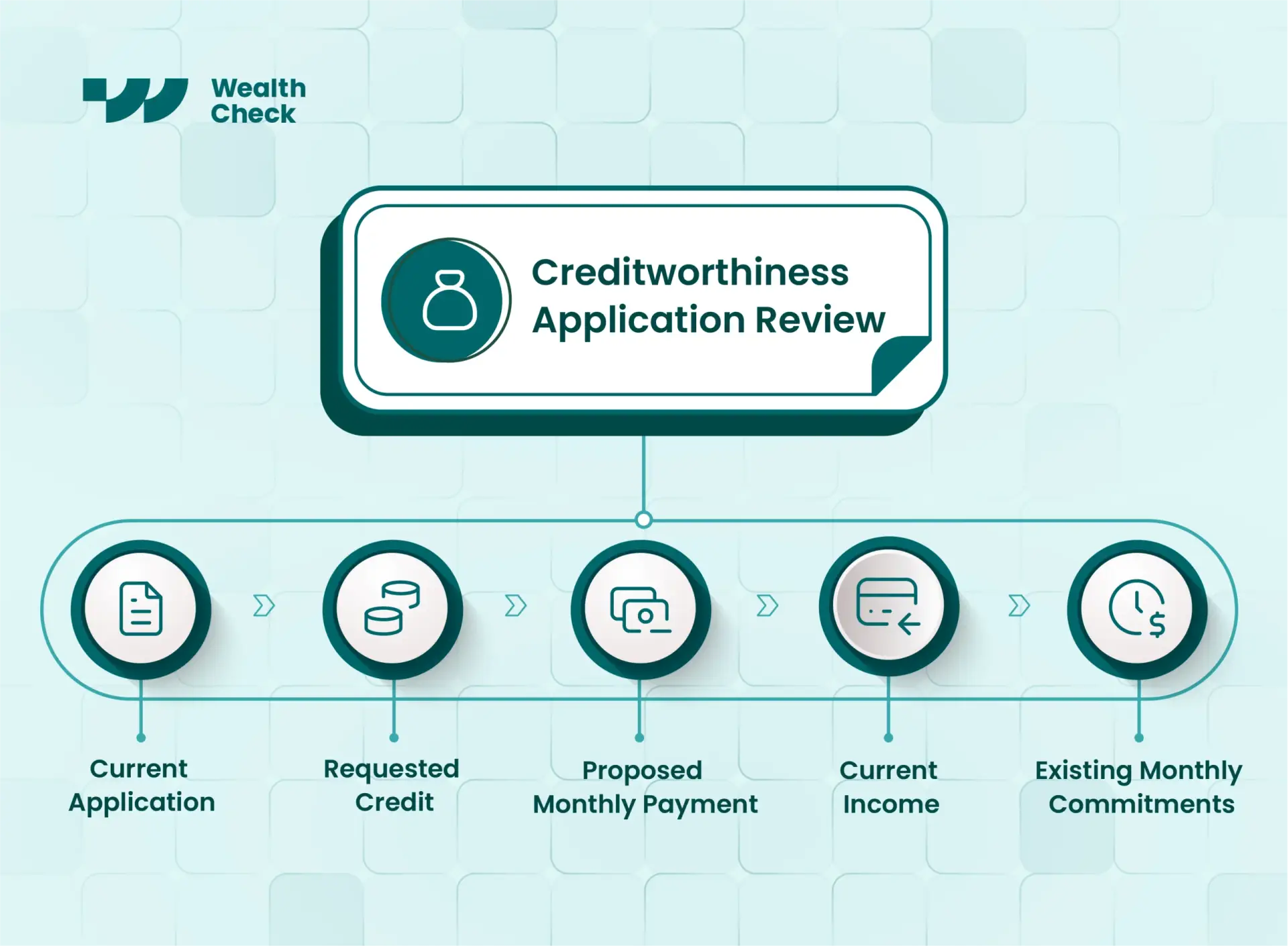
The creditworthiness definition used here is specific to the credit request in front of the lender. It covers the borrower’s expected ability and propensity to meet that obligation. A credit score is a separate model output that may inform the assessment.
At approval, future repayments have not yet occurred. The lender is making a forward-looking judgment from the current file and the requested facility. A new liability posted before a later application changes the evidence the lender is working from.
Creditworthiness Definition in the Current Application
The meaning of creditworthiness here is tied to the records in the current application. Current resources show what is available to support the payment. Repayment history records how existing credit has been handled. The lender reads those records in the context of the requested facility and the current application.
Why Does Creditworthiness Matter in Lending and Credit Decisions?
Before a lender commits funds, it must assess the repayment risk associated with the application. The lender applies the creditworthiness definition to decide if it will grant credit. Upon approval, that assessment can shape the amount or limit.
A request for a larger loan adds a larger future payment to the borrower’s existing commitments, so the lender must assess the request based on the borrower’s current position.
In an EU mortgage application, the lender must assess the consumer’s creditworthiness before concluding the credit agreement. That duty comes from Directive 2014/17/EU.
For lending teams comparing application figures with current account data, WealthCheck analyzes submitted documents and Open Banking data for financial assessment.
What Factors Affect Creditworthiness?
Under the creditworthiness definition used here, lenders may consider income or cash flow, existing debts and recurring expenses, repayment history, and financial stability. For a business borrower, revenue concentration, costs, cash position, and payment behavior can also matter. The mix depends on the borrower, product, and lender.
In this application, the car loan debit is the immediate pressure point. After that payment and the borrower’s other commitments are cleared, a smaller share of the salary remains available for another installment.
Available Balance on the Proposed Payment Date
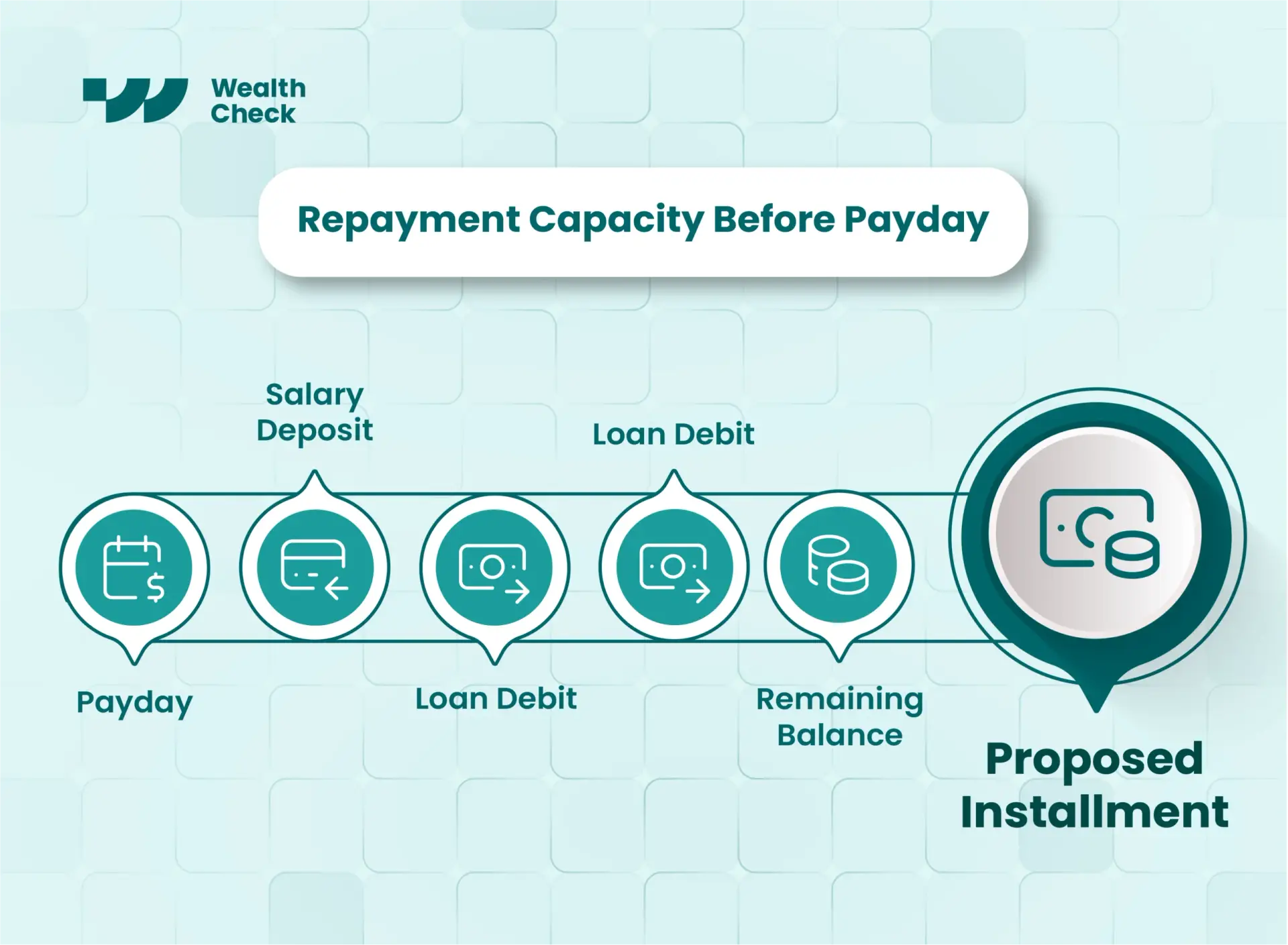
By the proposed payment date, rent and the existing loan debit will have already left the account. The lender is looking at what remains from the last salary deposit.
Repayment History
A missed payment or a run of late payments provides the lender with evidence of how existing credit has been managed. The lender may also look further back in the file. How much weight those older records receive depends on the product and the lender’s method. A limited credit history leaves the lender with less past behavior to examine.
Business Cash Flow and Revenue Concentration
Most of the company’s revenue comes from one customer, and those invoices are arriving slowly. The lender checks the cash generated by the business against its liabilities and the source expected to repay the facility.
When a customer’s payment lands after the facility installment date, less cash is available on the day the payment is due. That timing problem is visible in the current company file.
WealthCheck’s supported company fields include:
- Revenue concentration, which makes one customer’s payment date material to the facility repayment date.
- Costs and other obligations that change the cash position before that payment is due.
- Payment behavior, which shows how existing obligations have been handled.
A customer payment that lands after the facility due date leaves less cash available for that installment. If the same gap appears again later, it becomes part of the cash-position trend.
How Does Financial Stability Affect Creditworthiness?
One pay cycle ends with little cash left after the fixed debits. The next cycle shows another low balance before payday. A new installment would have to fit into that recurring narrow window.
Disposable Income
After fixed costs and debt repayments are cleared, the remaining balance is the money available for variable spending and a proposed installment. Disposable income and repayment capability are part of WealthCheck’s individual assessment outputs.
Repeated low balances before payday point to a monthly budget with little room for another fixed payment.
Creditworthiness Definition vs. Credit Score: What’s the Difference?
FICO does not use salary or employment information in its score calculation. That omission matters when a lender is deciding if a new monthly payment fits the applicant’s finances. Income and existing commitments remain visible to the lender even though neither figure changed the FICO score. The lender may also have current financial records that the scoring model never used.
| Aspect | Credit score | Creditworthiness |
| Form | Numerical model output | Lender judgment for the requested credit |
| Evidence | Data and calculation method used by the model | Current borrower information that the lender accepts for the application |
| Scope | Can change when the model or underlying file changes | Belongs to a specific lending decision and point in time |
A cutoff set for one lending product belongs to that product’s policy. It does not define creditworthiness across every lender or product.
What Financial Data Can Support a Creditworthiness Review?
For this application, the creditworthiness definition does not rest on the income figure entered on the form alone. Submitted documents can support that figure. Account activity shows the money actually arriving and the obligations already competing for it.
Submitted Income Documents
For an individual application, payslips or annual salary statements provide evidence of the income amount or source used. Business income statements provide the lender with revenue and cost context before it considers the timing of transactions.
Newly Recorded Debt Obligations
The earlier file has no car loan debit. In the current statement, that debit has already cleared before the proposed installment date, so the balance is lower than it was in the earlier file.
Late Customer Payments and Cash Flow
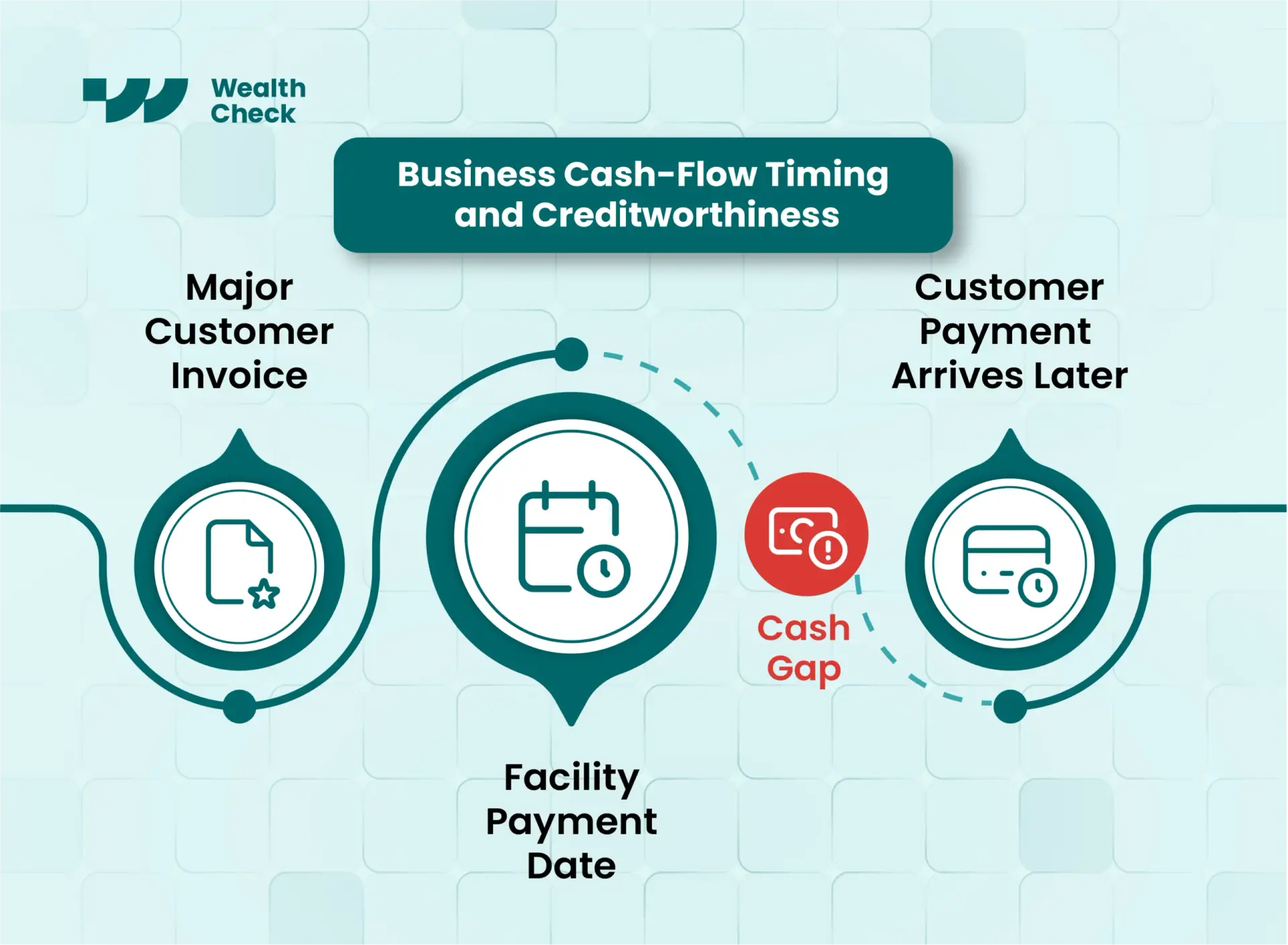
The facility installment falls due before the company’s largest customer pays its invoice. That cash is still outstanding on the payment date. Because most revenue comes from that customer, the delay affects a large share of the money expected to come into the business.
WealthCheck uses submitted documents and Open Banking data as inputs to its financial assessment. The lender or other customer retains the final credit decision.
How Do Lenders Apply the Creditworthiness Definition?
Lenders assess creditworthiness by establishing which information they can rely on, comparing the applicant’s income or cash flow with existing debts and recurring expenses, and considering repayment history in the context of the requested credit. The lender then applies its credit policy to that evidence and may use a credit score or other risk model as one input to the decision.
Income Figure Mismatches
An income figure that does not match the submitted records has to be resolved before the lender relies on it. A document or account record can provide that corroboration.
Once the lender accepts the relevant information, its credit policy determines how that evidence is incorporated into the creditworthiness assessment. For the facility itself, the lender carries the accepted evidence into its Credit Risk Assessment.
What Does Creditworthiness Look Like in Practice?
Three applications show how the creditworthiness definition can lead the lender to different questions:
- The verified income figure sits beside a recent record with no missed payments. Existing repayments leave room for the proposed payment. The lender still applies its policy to the requested product and amount.
- A later application shows a new monthly loan payment and a lower income record than the one used for the earlier loan. The lender cannot carry the earlier approval forward to this file.
- Most of the company’s invoices come from one customer whose payment now arrives after the proposed monthly loan installment is due. On that date, less cash is available to meet the facility payment.
Separate AML/CDD review: If the question is how substantial assets were accumulated over time, the Source of Wealth Assessment covers that work.
Can Creditworthiness Change Before a Credit Score Does?
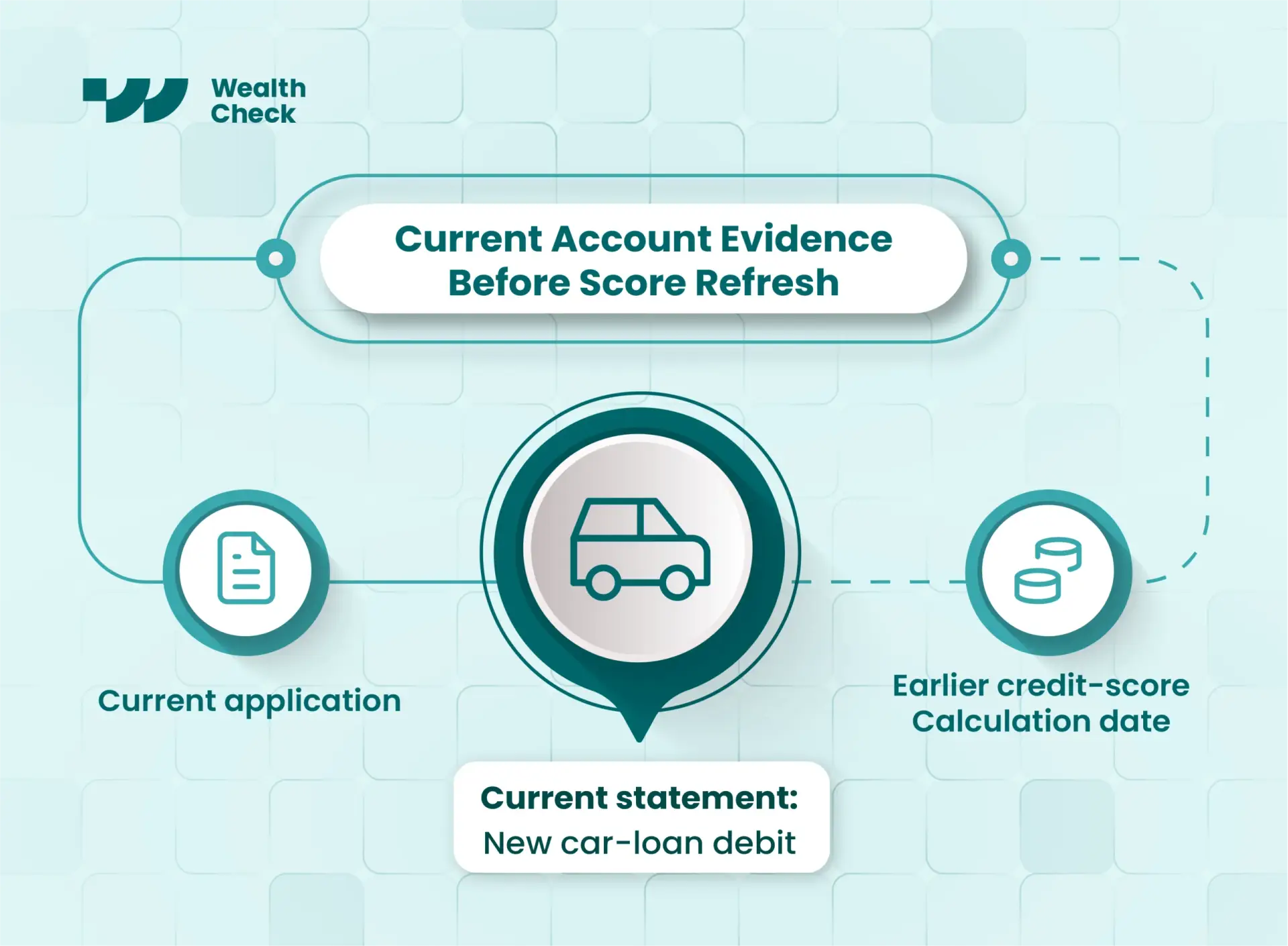
Yes. For the current application, the creditworthiness definition is applied to the evidence in front of the lender. A credit score remains a separate model output based on the data and model used to calculate it.
A lower verified income figure can change the evidence for the current request. So can a newly recorded obligation or a material change in business cash flow. The lender applies its policy to the current file rather than assuming an earlier decision still describes the borrower’s position.
How Does Affordability Fit Into Creditworthiness?
Affordability focuses on the amount available for a proposed repayment after existing commitments are accounted for. The wider creditworthiness review also considers the rest of the accepted evidence for the application.
Affordability Assessment examines the repayment capacity. The lender reads the result alongside repayment history and any unresolved income mismatch before applying its credit policy to the current application.
How Do AML Checks Differ From a Creditworthiness Review?
A large deposit with no transaction note creates an origin question. In AML/CDD work, the reviewer is trying to establish the source of the funds. In the credit file, the deposit matters because it changes the resources visible at that point in time.
Source of Wealth and AML/CDD
The source of wealth looks further back at how substantial assets were accumulated over time. That work also sits in AML/CDD. The creditworthiness review still needs current evidence around the proposed repayment and the obligations already due.
A large account balance may prompt an AML origin check. The credit file then has to show how the next installment will be funded.
What Does the Lender See in the Current File?
An account statement can show a new car loan debit before the credit score has caught up. That debit reduces the remaining salary before payday in the current application. If the income figure in the application also fails to match the submitted record, the lender has another issue to resolve before relying on it. The credit decision is based on the current file and the lender’s policy.
Separate compliance check: A large deposit with no transaction note creates an origin question. Source of Funds Verification addresses the AML/CDD review.
What Happens When the Application and Account Record Do Not Match?
An income figure that conflicts with the account record needs a closer look before the lender relies on it.
When a mismatch requires a more thorough review, WealthCheck brings submitted documents and Open Banking data into a single financial assessment. Lending teams can compare the income shown on the application with account-level evidence and affordability signals before they make their own decision.
FAQs About Creditworthiness
Why Does Creditworthiness Matter to Lenders?
Creditworthiness is part of the lender’s judgment about the repayment risk attached to a credit request. It informs the decision to grant credit. For an approved facility, the lender may use the same assessment to set the amount or limit. In some regulated lending contexts, including EU mortgages, the assessment is required before the credit agreement is concluded.
What Is Considered Good Creditworthiness?
Good creditworthiness has no universal numerical cutoff. It means the lender’s accepted evidence supports the borrower’s expected ability and propensity to meet the specific credit obligation under review. The lender applies its own policy to that file, so the same borrower may be assessed differently for another product or at a different point in time.
Can You Have Good Creditworthiness Without a High Credit Score?
Good creditworthiness does not require a universally high score. The lender treats the score as one input in the current application and applies its own policy to the full file. Any score cutoff comes from that product’s policy; it is not part of the definition of creditworthiness.
What happens when a US mortgage file has little traditional credit history?
The applicant arrives with little traditional credit history. Some US mortgage frameworks permit alternative payment references in that situation. Which references are accepted depends on the mortgage program.
Can Collateral Substitute for Repayment Capacity in a Credit Decision?
If the borrower misses payments, the pledged property gives the lender an asset to recover against. On the scheduled payment date, the installment must be paid from the borrower’s available resources.
Can an EU lender base a consumer-credit assessment solely on credit history?
From 20 November 2026, the revised EU Consumer Credit Directive bars exclusive reliance on the consumer’s credit history. The lender uses relevant information about the consumer’s financial and economic position for the application.