
Suppose a rental applicant declares monthly pay of $3,200. A matching bank credit is labeled “transfer,” leaving the property manager without an identified employer or other payer. The credit confirms receipt of the money. Its origin still needs to be checked before it is counted as employment income.
A source of income identifies the work, business activity, asset, or entitlement behind the reported amount. The source guides which records to request. Without that context, a business might mistake an account transfer for pay or treat an unusually good trading month as a normal monthly income.
Key Takeaways
Knowing the source behind an income figure helps an organization choose relevant evidence and interpret the amount before using it in a financial assessment.
- A source of income identifies the activity, asset, or entitlement behind reported income.
- Employment, self-employment, property, investments, and benefit arrangements require different supporting records.
- Gross business receipts, bank transfers, and asset-sale proceeds are not interchangeable with recurring personal income.
- Identifying and checking earnings is distinct from determining affordability or making a credit decision.
What Does a Source of Income Mean on a Form?
On an income declaration, the source identifies the arrangement behind the money. Employment wages, freelance fees, rental payments, investment returns, and pension payments are common examples. The amount and payment frequency are separate facts.
A reported $3,200 a month could represent salary, seasonal freelance fees, or investment distributions. The reviewer first needs to identify the source, then determine the period and income measure behind the figure.
In international tax law, source of income can instead refer to the country where earnings are treated as arising. That geographical classification may affect cross-border taxation. On an income declaration, the term describes the activity, asset, or entitlement behind the payment.
Source of Income on an Application
An application asking for a primary source of income usually wants to know how the applicant mainly supports themselves. It may request additional earnings and supporting records separately. There is no universal percentage that turns one source into the primary one.
Forms also use different definitions of income. An employer may report gross salary, while an applicant enters the net amount received. A good response identifies the activity or payer and follows the form’s requested period and gross or net basis.
Why Do Businesses Ask About a Source of Income?
Businesses ask because a payment figure alone cannot explain the nature or dependability of the earnings. A property manager assessing rent, for example, may need to know if the reported amount comes from current employment or several short-term contracts. A finance provider may examine the same distinction alongside existing obligations and its applicable assessment rules.
The source can guide the choice of evidence. An annual salary statement makes sense for an employee; it says little about a freelancer’s current fees. It also helps reviewers recognize income that may end, vary considerably, or be paid at irregular intervals.
Identifying an income source is one input into a financial assessment. A finance provider still has to look at expenses and existing commitments before judging repayment capacity. That decision belongs to the organization.
What Are the Main Types of Income Sources?
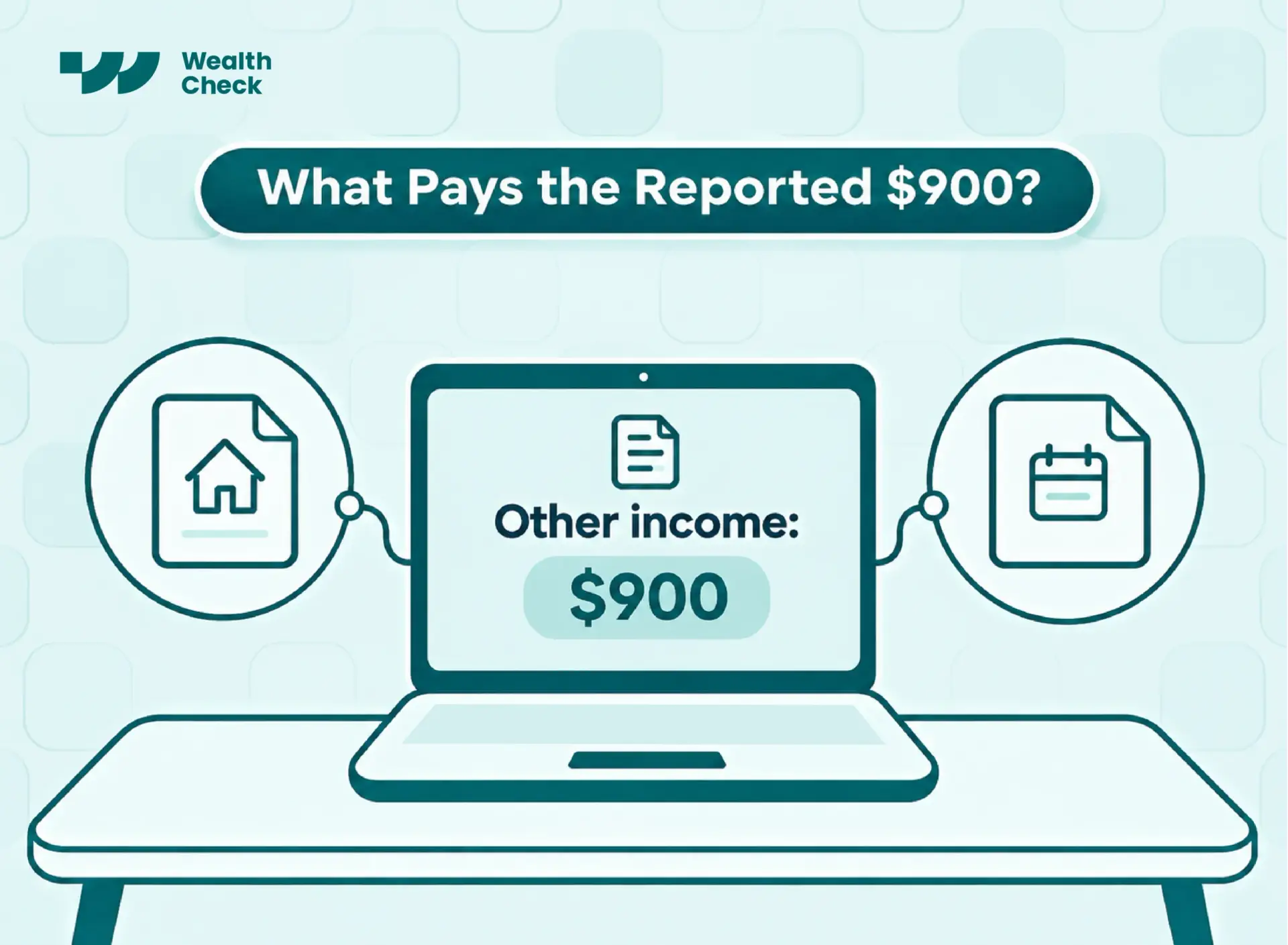
A reviewer sees “other income: $900” on an application and asks the applicant to name the source. It could turn out to be rent, which calls for property records. Naming the source comes before choosing the evidence. The common types include:
- Earned income: wages, salaries, and self-employment fees.
- Passive income: rent and other receipts commonly described as passive.
- Investment income: interest and dividends.
- Pensions and annuities: payments from retirement or annuity arrangements.
- Government benefits: payments under a qualifying benefit program.
These categories can overlap, and the labels do not decide tax treatment. A landlord has to check the rules applying to the property and their circumstances, rather than take the everyday “passive income” label as a tax category. On an income declaration, state the underlying activity or payer.
How Does Earned Income Work?
An employee earns wages for an extra shift; a self-employed plumber earns a fee for a call-out. Both payments come from work. Salaries and tips belong in this broad earned-income group too. For the plumber, checking the declared earnings involves business records. The employee’s pay can be checked through payroll.
Employment Pay
Start with the employee’s payslip for the month being assessed. It names the employer and sets out pay for that period, including any tax or other deductions shown. The amount arriving in the employee’s bank account will usually be the figure left after those deductions.
For a view across the year, use the annual earnings statement. With a new starter, a contract might be all the reviewer has. It records agreed pay; the reviewer cannot use it to establish payments received.
Self-Employment and Business Receipts
Consider a freelance designer who bills $6,000 in a busy month and has collected only $3,000 by month-end. Counting the full invoice total would count the money still owed by clients. Even the collected amount is before business costs, so the reviewer has yet to establish what the designer earned from that work. How this reaches the designer personally also depends on the business structure.
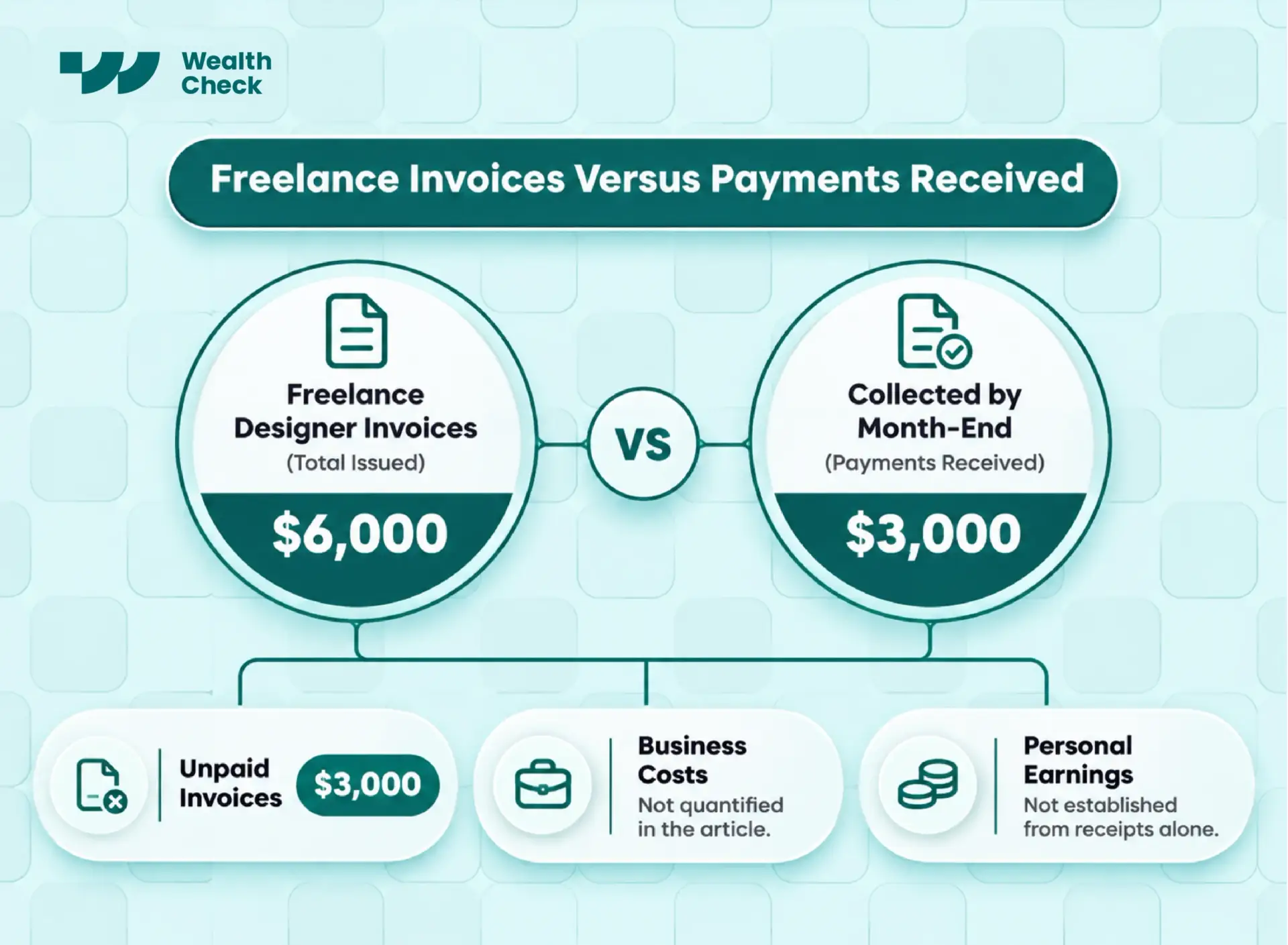
For that designer, matching a client’s settled payment to its invoice helps explain the account credit. Trading accounts or tax documents provide a wider view of earnings. A withdrawal from the business account needs care: the designer could be drawing on money already held there, rather than profit made that month.
What Counts as Passive Income?
A tenant’s rent can arrive in a month when the landlord takes on no new paid work. That is the everyday idea behind calling rent passive income. It says little about the hours spent arranging repairs or dealing with tenants. Investment distributions are another common example.
The label is less useful than the underlying facts in a financial application. Contracted rental income, rent collected, and the amount left after property costs can differ. Likewise, an investment account’s value is not the amount it pays out each month.
Formal tax rules may use “passive activity” in a narrower way. For example, US passive-activity rules distinguish some rental and business activities from portfolio income. That tax treatment should not be applied automatically to applicants in other countries or to every affordability assessment.
How Do Investments Generate Income?
Interest and dividends are common income streams from savings and investments. A bond or savings account may pay interest. A company may distribute a dividend to shareholders. Income records for these sources often need to establish both past distributions and the assets held during the period under review.
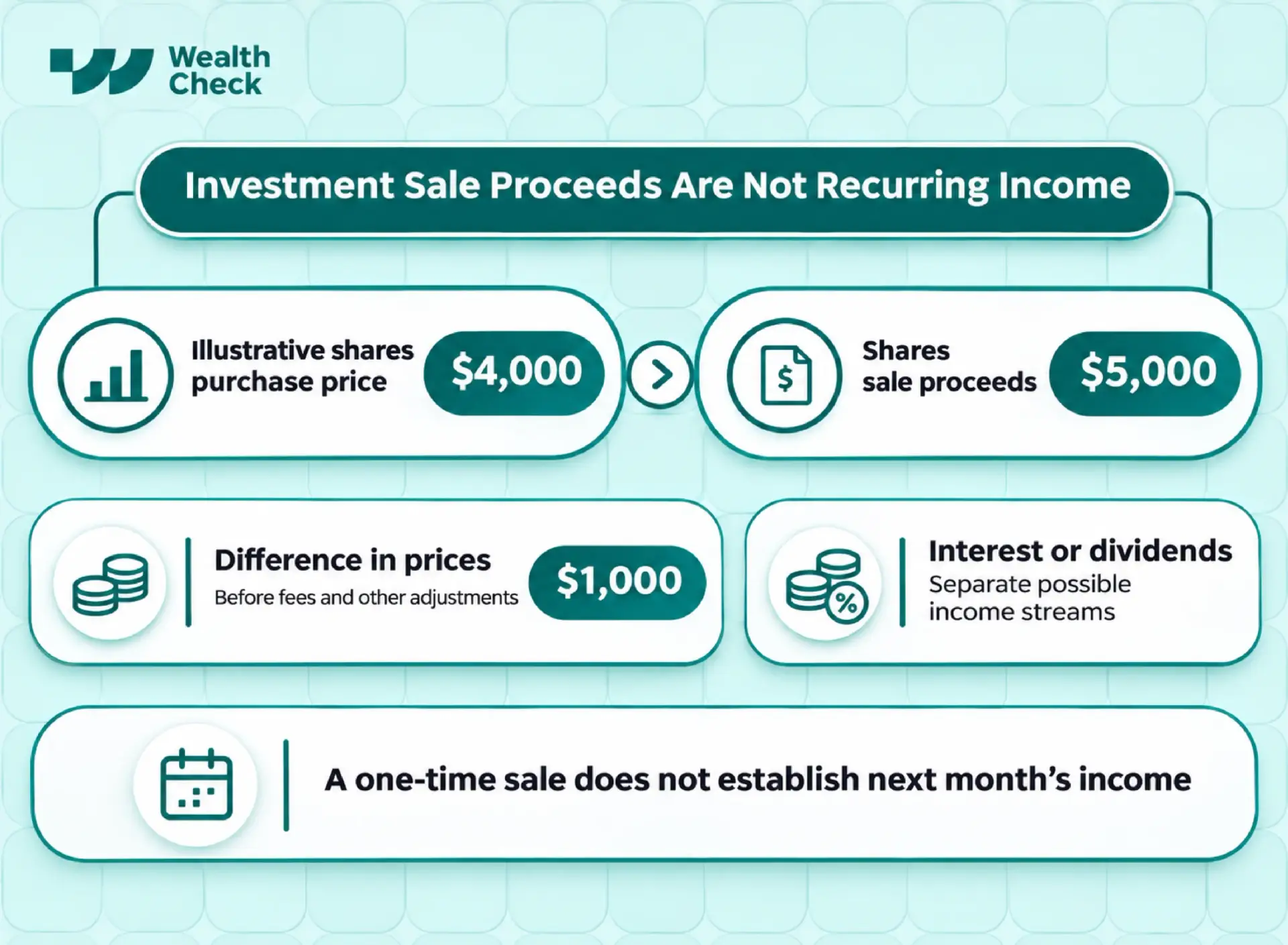
Selling an investment raises another question. The amount credited from a sale includes the value of the asset sold; it is not identical to the capital gain. If shares bought for $4,000 are sold for $5,000, the proceeds are $5,000. The price difference is $1,000 before fees and other adjustments. Neither figure shows that another sale will occur next month.
Selling the shares or spending the savings can change later interest or dividend payments. Specific mortgage programs apply their own continuation rules.
Which Other Sources of Income Are Common?
Rental income, retirement payments, annuities, and government benefits may all appear on an income declaration. The payment terms matter when comparing amounts. Gifts, transfers from savings, and one-off retirement-account withdrawals may also appear as bank credits, but they do not automatically establish recurring earnings. Their treatment depends on the rules used for the assessment.
- Rent is commonly tied to a property and a tenancy. A lease describes the agreed rent, while payment records show the amounts actually received. Property costs and the applicable assessment policy can affect the amount that is counted for a decision.
- Pensions and annuities have provider records identifying the payment arrangement. The payment terms affect how the next distribution is evaluated.
- Government benefits can also be a source of income. An award notice may identify the payer, entitlement, and payment period. Acceptance rules depend on the decision and jurisdiction. A benefit payment should not be treated as universally invalid income.
What Is the Difference Between Primary and Secondary Income Sources?
The primary source of income is ordinarily the main way an individual receives earnings or financial support in the context of an application. A secondary source adds another income stream, such as weekend employment alongside a full-time job or rent received in addition to salary.
Suppose a customer has regular employment pay and occasional consulting fees. The job may be the main source even during a month when consulting brings in more money. One exceptional month does not automatically change the description of the person’s normal income pattern.
Multiple sources do not, by themselves, establish stability. A reviewer still needs to know the amounts, relevant periods, and conditions attached to each source. Some forms ask for all sources; others have separate fields for main and additional earnings.
How Can Businesses Verify a Source of Income?
Verification connects the claimed source to records that identify a payer, a payment basis, and a relevant period. The suitable evidence depends on the type of income and the receiving organization’s policy. An account credit does not, by itself, identify earnings. The records below are examples, not universal acceptance requirements.
| Reported source | Records that may help | What the record may leave unresolved |
|---|---|---|
| Employment | Payslip, annual salary statement, employer earnings record | Gross pay versus amount deposited; current employment status |
| Freelance or sole-trader work | Tax records, accounts, and invoices matched with payments | Unpaid invoices, costs, and business versus personal earnings |
| Interest or dividends | Investment statements, distribution history, ownership records | Changes in holdings and future payment levels |
| Rental property | Lease, rent receipts, relevant tax or rental records | Arrears, property expenses, and applicable qualifying amount |
| Pension, annuity, or benefit | Provider statement, pension payslip, award notice | Variable payments, eligibility period, or end date |
An applicant’s salary record may show gross pay for March, while the bank shows the after-deduction amount credited in April. The reviewer needs to reconcile the period and pay basis before treating the difference as suspicious.
A tax return may support income earned last year without proving that the same earnings continue today. For more on comparing supporting records, see What Is Income Verification.
What Do Income Sources Look Like in Real Applications?
In one hypothetical application, a large freelance fee gives a misleading picture of an ordinary month. In another, the rent listed in the applicant’s lease differs from the payment recorded alongside salary.
A $6,500 Fee on a $3,000-a-Month Application
The $6,500 deposit catches the property manager’s eye on the latest bank statement. The video editor applying to rent the property has put an average monthly freelance income of $3,000. Those figures could both be right: the deposit is one project fee after two quieter months. The question for the manager is how the editor calculated the average.
Ask for invoices and settled payments across the period defined by the screening policy. The reviewer can calculate the average for that period and compare the quiet months with the busy ones. A single $6,500 credit gives little indication of the editor’s usual monthly earnings.
Checking a Short Rent Payment Alongside Salary
The rent credit is $250 short. In this hypothetical finance application, the customer receives a salary and has declared $900 a month from a small rental property. The reviewer finds the $900 figure in the lease, then sees $650 in the account for the period being assessed.
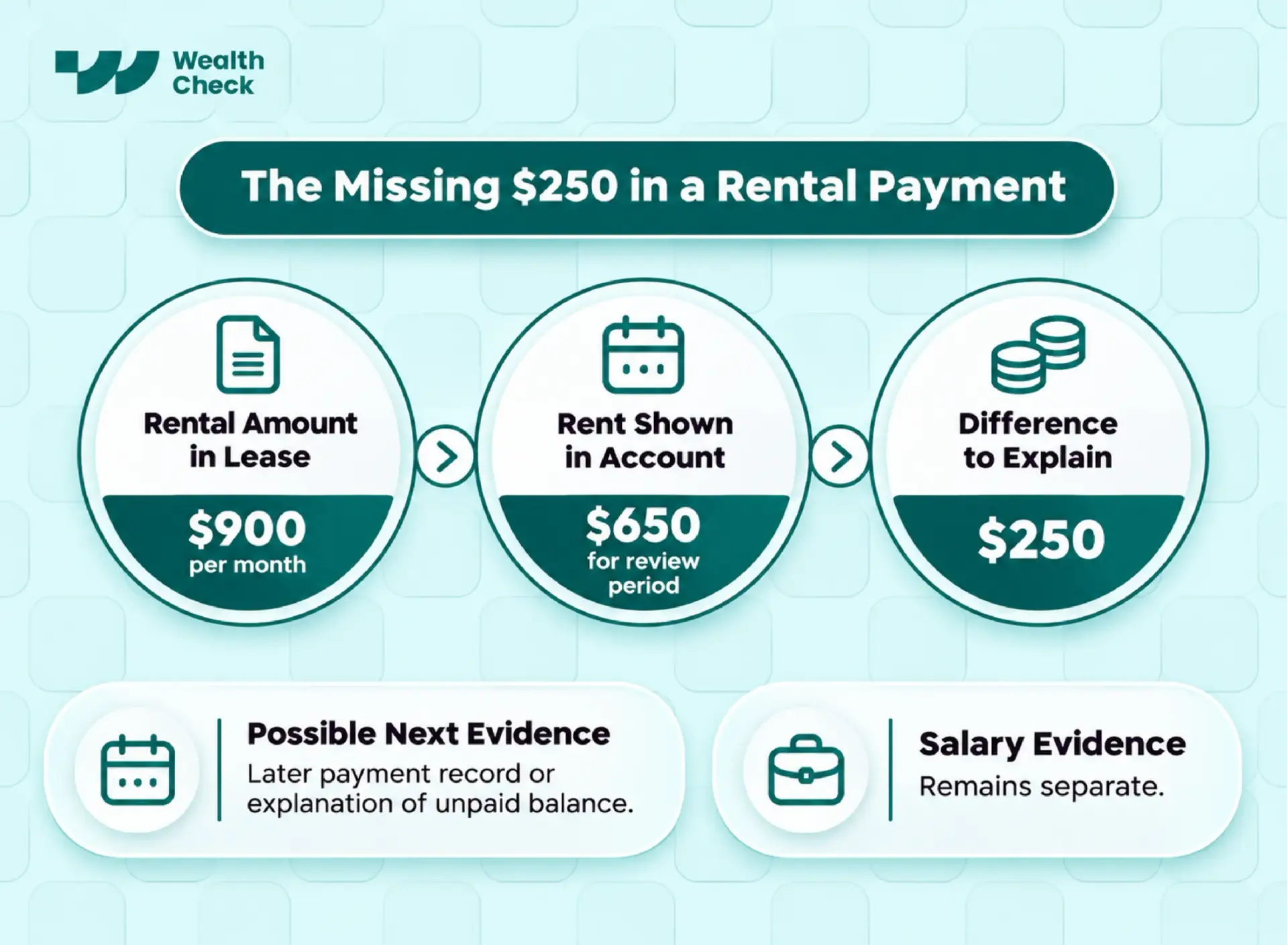
Has part of the rent arrived later, or is some still unpaid? That question needs an answer before the rental figure can be used.
The reviewer asks the customer to account for the missing $250, using a later payment record or an explanation of an unpaid balance. Salary evidence cannot fill that gap. Before deciding on the application, the finance provider also compares the supported income with this customer’s expenses and existing commitments.
How Does Source of Income Differ From Source of Funds and Source of Wealth?
These terms describe different financial questions.
- A source of income identifies what generates or pays the reported income.
- Source of Funds Verification concerns the economic origin of particular money used in a transaction or held in an account.
- Source of Wealth Assessment examines how a person’s overall assets or wealth have accumulated over time.
Imagine a business owner who uses savings to pay a property deposit. Their main income source could be consulting. The funds for the deposit might come from savings built up over several years, and their wider wealth might include business ownership and inherited assets. Naming the current bank that sent the deposit does not answer all three questions.
In regulated contexts, a source-of-funds or source-of-wealth inquiry may have specific risk-based requirements. A standard income declaration should not automatically be described as an anti-money-laundering investigation.
Conclusion: What Should Businesses Know About a Source of Income?
A useful income declaration identifies the origin, relevant period, and evidence behind the amount. That makes it easier to spot genuine gaps without mislabeling a transfer, asset sale, or gross business receipt as ongoing pay.
The next decision may require an Affordability Assessment and consideration of Disposable Income, debts, expenses, and financial stability. Those checks go beyond identifying an income source.
WealthCheck supports document-based income checks alongside a separate, consent-based PSD2 Open Banking route. Its published materials describe analysis of income, expenses, liabilities, and transaction behavior, with broader affordability and financial-risk findings. The organization using those results remains responsible for its own final decision. Income Verification is the relevant capability to explore when a business needs to assess claimed earnings as part of that wider review.
What FAQs Arise When Reviewing a Source of Income?
Why Do Lenders Ask About Your Source of Income?
Lenders ask to distinguish earnings from other deposits. Salary, loan proceeds, and transfers from savings can all reach the same account, but only salary in that example represents employment pay. A lender checks the income period, then considers eligible amounts alongside debts and expenses under its policy.
Can You Have More Than One Source of Income?
Yes. An applicant may earn a salary, freelance fees, and rent during the same period. Where a form allows it, list each source with its amount and payment frequency. That keeps an unusually busy freelance month from being mistaken for ordinary recurring pay.
What Documents Can Be Used to Verify a Source of Income?
Pay stubs or employer earnings records can support wages. Invoices paired with payment records help explain freelance fees; a lease alone does not show rent received. Investment statements and benefit award notices cover other sources. The required period and evidence depend on the assessment.
Does Investment Income Count as a Source of Income?
Interest and dividends can count as investment income. Account value alone does not show recurring payments, so a reviewer may ask for distribution history and current holdings. Proceeds from selling shares need separate treatment: the sale amount includes invested capital and says little about next month’s income.
Can Government Benefits Be Considered a Source of Income?
Government benefits can be considered income, but the applicable rules depend on the benefit and the decision being made. An award notice may identify the payer, amount, payment period, and any stated end date. A reviewer should not assume every benefit qualifies or dismiss it solely because of its origin.