
Customer creditworthiness matters when a business offers invoice terms, raises an account limit, or grants a regulated credit product. In each case, how to determine creditworthiness of a customer depends on the proposed commitment and the evidence available about the customer’s ability to pay.
A weak assessment leaves the organization relying on stale or incomplete information. That raises payment exposure and makes the later decision harder to defend.
A credit report adds repayment history when available, and a score summarizes only part of that record. Some customers have no useful bureau file, so the assessment also needs dated income, liabilities, and payment records.
Key Takeaways
How to determine the creditworthiness of a customer begins with the current file in front of the reviewer and the obligation being considered.
- A creditworthiness assessment needs current, supportable evidence tied to the specific credit being considered.
- Repayment history is one input to a broader assessment of the customer’s current capacity to meet the new obligation.
- Changed circumstances can reopen the assessment even for an existing customer with a strong prior record.
- Documents and consent-based Open Banking data can inform the assessment. The client organization retains the final credit or eligibility decision.
How to Determine the Creditworthiness of a Customer?
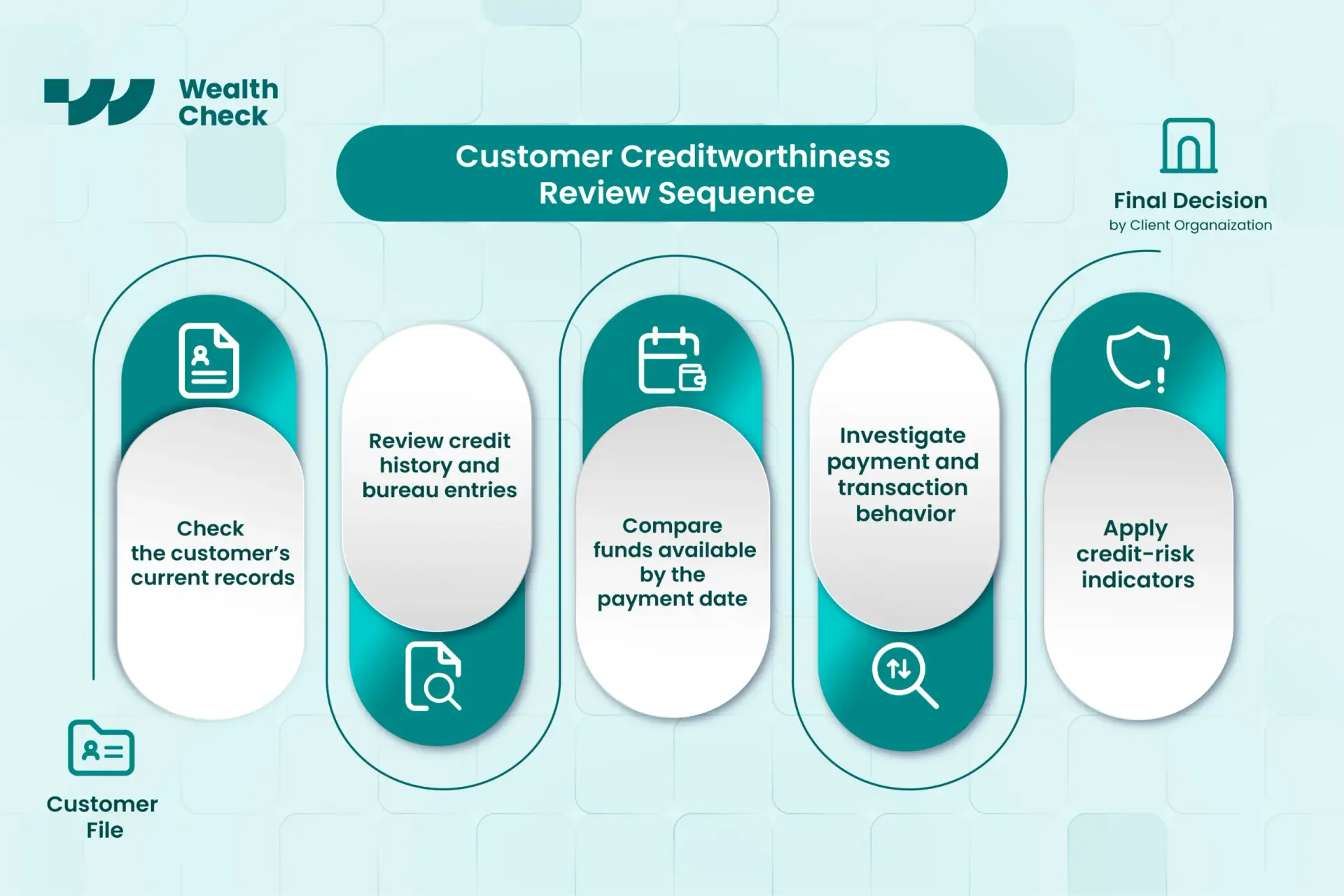
Look at the payment being proposed and when it falls due. Recent income or cash-flow records show what the customer has left after existing bills. Relevant credit history shows how earlier payments were handled. Use the records and the organization’s credit policy to judge the specific commitment.
Choosing how to check customer creditworthiness depends on the proposed commitment and the customer’s circumstances. A small routine request may need less investigation than a larger or more complex exposure. The organization then applies its own policy to the findings it supports.
Customer Creditworthiness
Customer creditworthiness is a reasoned judgment about the customer’s ability and propensity to meet a particular credit obligation, based on the evidence accepted for that decision. A credit score is one input. The broader definition is covered in What Is Creditworthiness.
Why Is It Important to Assess a Customer’s Creditworthiness?
A supplier extending 30-day terms faces a cash-flow gap if the customer pays late. A consumer lender faces repayment risk and may have additional duties under consumer-credit law. In both cases, reviewing current evidence helps explain the credit decision later.
The record of a customer credit assessment should preserve:
- The evidence used for the decision
- Any gaps or disputed items still open at sign-off
- How the credit policy was applied to those findings
What Do EU and Dutch Rules Require for Consumer Credit?
Under Article 18 of Directive (EU) 2023/2225, Member States must require creditors to assess a consumer’s creditworthiness before concluding a credit agreement. A significant increase in the total credit amount calls for reassessment using updated information.
Where the assessment uses automated processing of personal data, consumers have rights to request human intervention, an explanation, and review. EU implementing measures are due to apply from November 20, 2026.
In the Netherlands, implementation was not final on November 9, 2026. The Tweede Kamer approved Bill 36.924 on October 6; the Eerste Kamer Finance Committee issued its report on November 3 and awaited a government response. Commencement is to be set by royal decree, so the national start date was not yet confirmed.
These are consumer-credit obligations, not a blanket rule for trade credit between businesses. A wholesaler reviewing 30-day invoice terms needs a documented commercial assessment under the law and contract that apply.
In UK-regulated consumer credit, FCA rules distinguish credit risk from affordability risk; that framework does not replace Dutch consumer-credit rules.
What Factors Determine Customer Creditworthiness?
The five Cs of credit provide a practical way to organize evidence. They are not an automatic scoring formula or a universal legal checklist; apply them to the customer and the proposed terms:
- Character (payment record): Check dated invoice history and trade references. A 45-day overdue supplier bill deserves follow-up even after a year of prompt payments.
- Capacity (repayment cash flow): Compare receipts expected before the due date with rent, payroll, taxes, and existing debts. A profitable month can still have a weekly cash gap.
- Capital (financial buffer): Review current cash, retained earnings, and liabilities. Record the buffer after existing commitments, not just revenue.
- Collateral (security, if offered): Check ownership, value, and terms of any pledged asset or guarantee. Security is additional protection, not proof of repayment capacity.
- Conditions (credit terms): Compare the proposed credit limit and due date with seasonal sales, other obligations, and recent trading changes. Match terms to the verified cash cycle.
A wholesaler considering a 30-day credit limit sees that the retailer paid its last three invoices on time but now has a 45-day overdue bill with another supplier. Before approving the new limit, the reviewer checks that debt, expected receipts before day 30, the cash buffer, any guarantee, and the terms the retailer can support.
Step 1: Check the Customer’s Most Recent Records
A retailer applies for 30-day terms but sends last year’s accounts. The wholesaler needs more recent figures before setting a limit. Record the dates covered by the documents, especially where a month is missing.
An applicant’s stated income may need corroboration with independent records. Check for gaps between the statement date and the credit decision.
WealthCheck’s document route supports payslips, annual salary statements, bank statements, and income or tax statements.
With customer consent, the Open Banking route adds connected-account data. The organization may need other records beyond these supported inputs.
Step 2: Review Credit History and Credit Reports
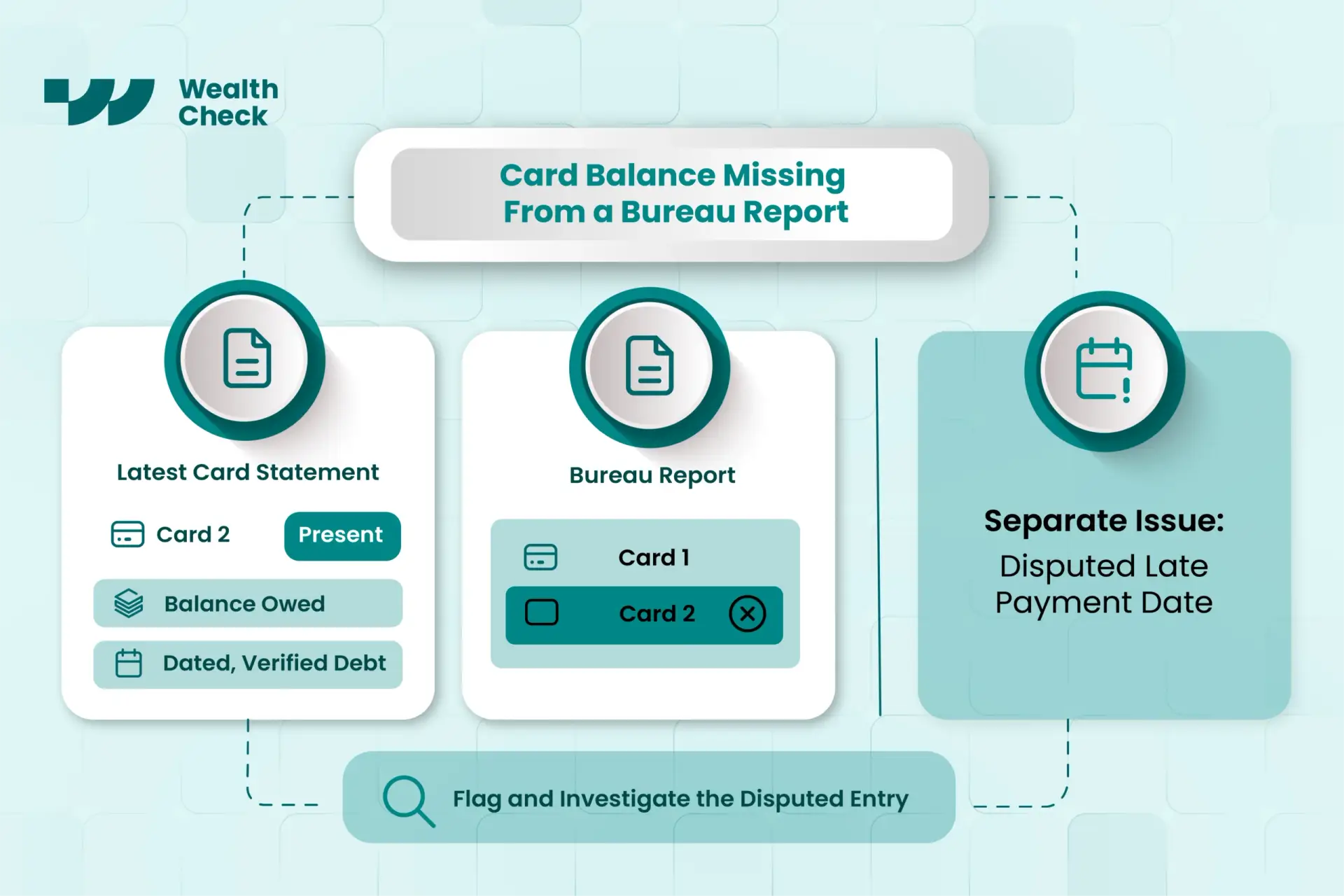
A credit report lists a card balance from March, but the customer’s April statement shows a payment made since then. Check the dates before treating the bureau figure as current. Other debts may be absent altogether because not all creditors report to the same bureau.
A customer credit check may reveal errors in a credit report. If a customer disputes an entry, flag it and investigate the original record; a disputed item is not automatically excluded. Its treatment depends on the bureau’s dispute status, applicable law, the scoring method, and the organization’s credit policy. Examples worth checking include:
- Debt belonging to someone else
- The same account is listed twice
- A balance higher than the amount actually owed
- Payment was recorded as late even though it reached the creditor on time
The customer has a second card that is absent from the bureau file. Its latest statement shows an amount owing, so the reviewer includes that dated balance among the customer’s debts.
Step 3: Check What Is Available When Payment Is Due
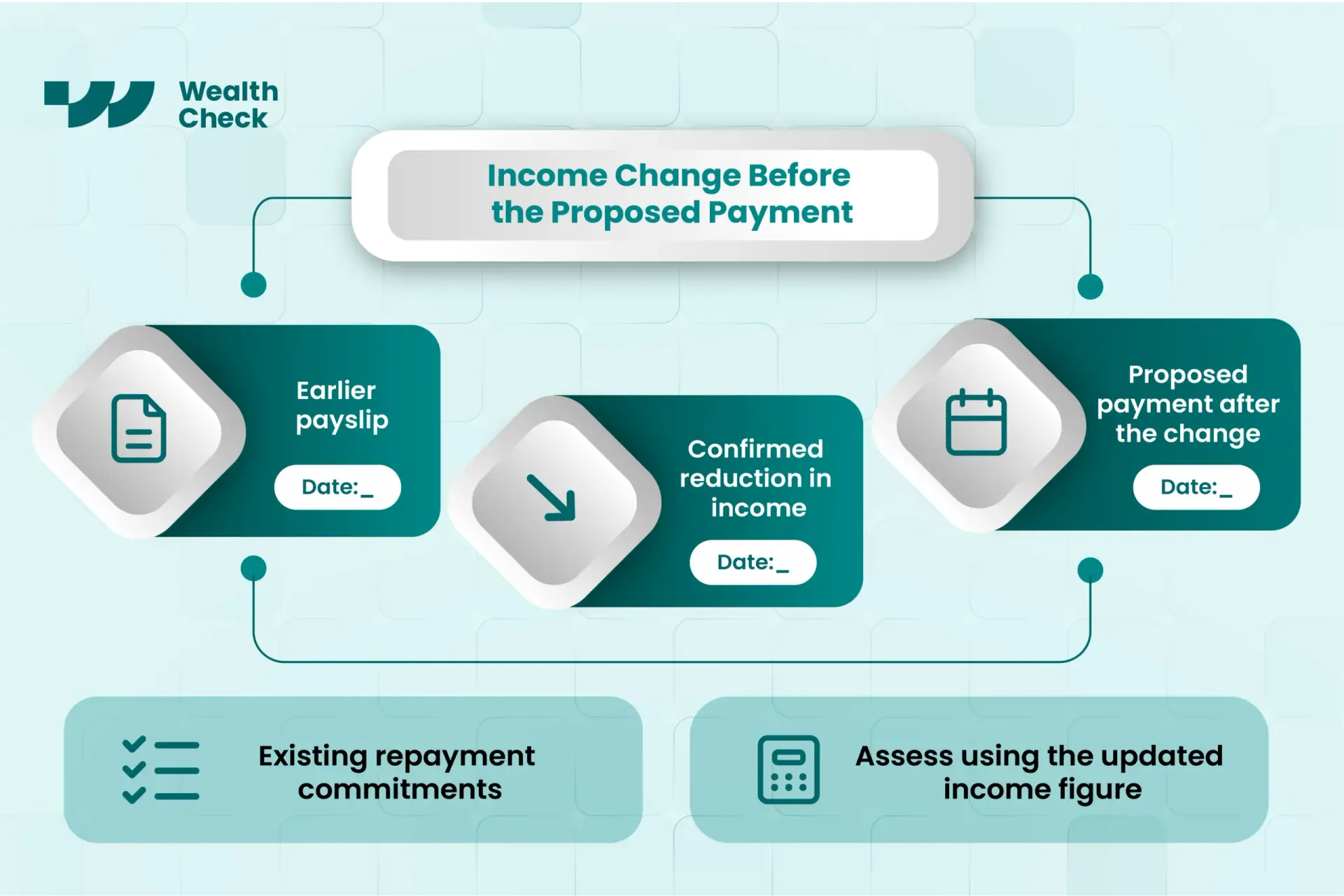
A retailer’s supplier invoice may fall due before the next round of sales receipts arrives. Check the cash expected by that date against rent, loan payments, and bills that have to be paid first. A confirmed drop in receipts belongs in the figures for the affected period.
For a consumer-credit assessment, include foreseeable income reductions in the repayment-capacity review as required by applicable rules.
Using an older payslip alone can overstate available income after a known change. Affordability Assessment covers the detailed repayment-capacity calculation.
With consent, WealthCheck’s Open Banking route analyzes six months of connected-account transactions for income and expenses. The same analysis identifies commitments and transaction behavior. These findings add to the current evidence in the file. The organization applies its own policy to that evidence.
Step 4: Investigate Payment and Financial Behavior
The account feed stops on the day of a large outgoing payment. The balance and later transactions after that point are missing.
- Request the next statement for the missing dates.
- Identify the large payment only from a dated record.
- Record later missed payments only from dated entries.
- Mark days with no statement coverage as missing.
Step 5: Apply Credit Risk Indicators to the Decision
An earlier record of paid invoices will not tell a wholesaler if its next invoice can be paid on time. In a consumer-credit file, a stable salary may tell only part of the story when rent and existing loan payments are high. The details below affect how much credit the customer can reasonably take on.
- An invoice is due next week, but the retailer’s sales proceeds usually arrive at month-end. A healthy month on paper may still leave a shortage on the payment date.
- For a salaried customer, disposable income after tax is not the amount left for a new loan. Rent and existing repayments still have to be paid from it.
- Last year’s invoices were paid promptly, but two supplier bills are now overdue. Check what changed, including any recent drop in receipts, before relying on the older track record.
- A US consumer-credit review may include the debt-to-income ratio (DTI), calculated as monthly debt payments divided by gross monthly income. The CFPB does not set a single approval cutoff for this figure.
Credit Risk Assessment covers the broader risk decision.
Supported document and Open Banking inputs can inform credit risk analysis through affordability and financial-risk insights. Public product material does not disclose a proprietary weighting method or fixed approval cutoff. Final credit or eligibility decisions belong to the client organization.
Combine Current and Historical Signals
Years of on-time payments remain in the bureau report. A newer bank statement also shows a finance payment that does not appear in the older records. The reviewer adds payment to the customer’s monthly outgoings before assessing the new request. The new debit is visible before the current request is decided.
How Should Creditworthiness Be Assessed for New and Existing Customers?
A wholesale customer requests higher purchase-on-account terms after a year of timely invoice payments. That record describes the earlier order amounts, not the larger exposure now proposed.
- A confirmed reduction in income changes the basis for the larger request.
- In UK-regulated consumer credit, a significant increase in the amount of credit or the credit limit requires another creditworthiness assessment.
- Customer familiarity does not substitute for current evidence.
A missed payment after a long clean run adds evidence that the original request never contained. Fresh financial records now sit beside the organization’s own account history. A first-time customer has no internal repayment record, so the decision relies more heavily on current external evidence.
What Are Best Practices for Making a Customer Credit Decision?
At sign-off, every material finding needs a dated source and a documented policy reason. Keep other checks separate from the customer’s repayment assessment:
- Keep separate checks in their own workflows: Source of Funds Verification concerns the origin of a particular transaction, while Source of Wealth Assessment concerns accumulated wealth.
- Each figure used in the credit decision remains tied to its source and date.
- The final note records unresolved items and the treatment applied to them.
Conclusion: How to Determine the Creditworthiness of a Customer
At sign-off, the reviewer cites the current record behind each figure used in the decision. A stale figure replaced earlier in the file does not return to the final note.
- Any remaining gap stays visible.
- Affordability and financial-risk insights from supported inputs inform the organization’s review.
- The organization applies its own policy and makes the final decision on credit or eligibility.
- The final note separates observed facts from the conclusions or policy treatment applied to them.
The document route accepts payslips. Public material also lists financial statements and income or tax records.
- With customer consent, the Open Banking route reads six months of connected-account transactions.
- The output covers money coming in and going out.
- Commitments and transaction behavior are included as separate findings.
WealthCheck analyzes supported documents or consent-based Open Banking data for income, expenses, liabilities, and transaction behavior. A financial health check or financial assessment can use those affordability and financial-risk insights, while the client organization makes the final credit or eligibility decision. Explore WealthCheck to see the supported routes.
FAQs About Determining Customer Creditworthiness
What Documents Can Be Used to Verify a Customer’s Creditworthiness?
For a business customer, recent financial statements, aged receivables or payables, and trade references can support the assessment. An individual’s earnings and commitments may be checked against payslips, bank statements, and income or tax records. Use records covering the period being assessed.
What Are the Warning Signs of a High-Risk Customer?
Repeated returned payments or invoices slipping beyond agreed terms warrant a closer look, particularly if cash receipts no longer cover bills falling due. Check the dates and latest account records before approving a higher limit. These are risk signals, not predictions of default.
How Often Should a Customer’s Creditworthiness Be Reviewed?
No universal annual or quarterly review interval applies to every customer. Set review dates according to exposure and credit policy, and reassess sooner after repeated late payments or material changes in the customer’s finances.
Can Trade References Help Assess a Business Customer’s Creditworthiness?
A supplier reference gives direct evidence of how a business customer paid invoices in a specific relationship. It does not describe the customer’s full trade-credit record, so it works as supporting evidence alongside independent records, especially where bureau coverage is limited.
Because the customer may choose the reference, a single favorable supplier relationship should not stand in for the entire trade-credit picture.
How Do Credit Checks and Scores Affect Decisions in the US?
In US credit reporting, a hard inquiry may lower a score; a soft inquiry does not. Under Regulation B, adverse-action reasons must identify the factors actually used. A low-score label alone may be insufficient when specific factors drove the decline.